
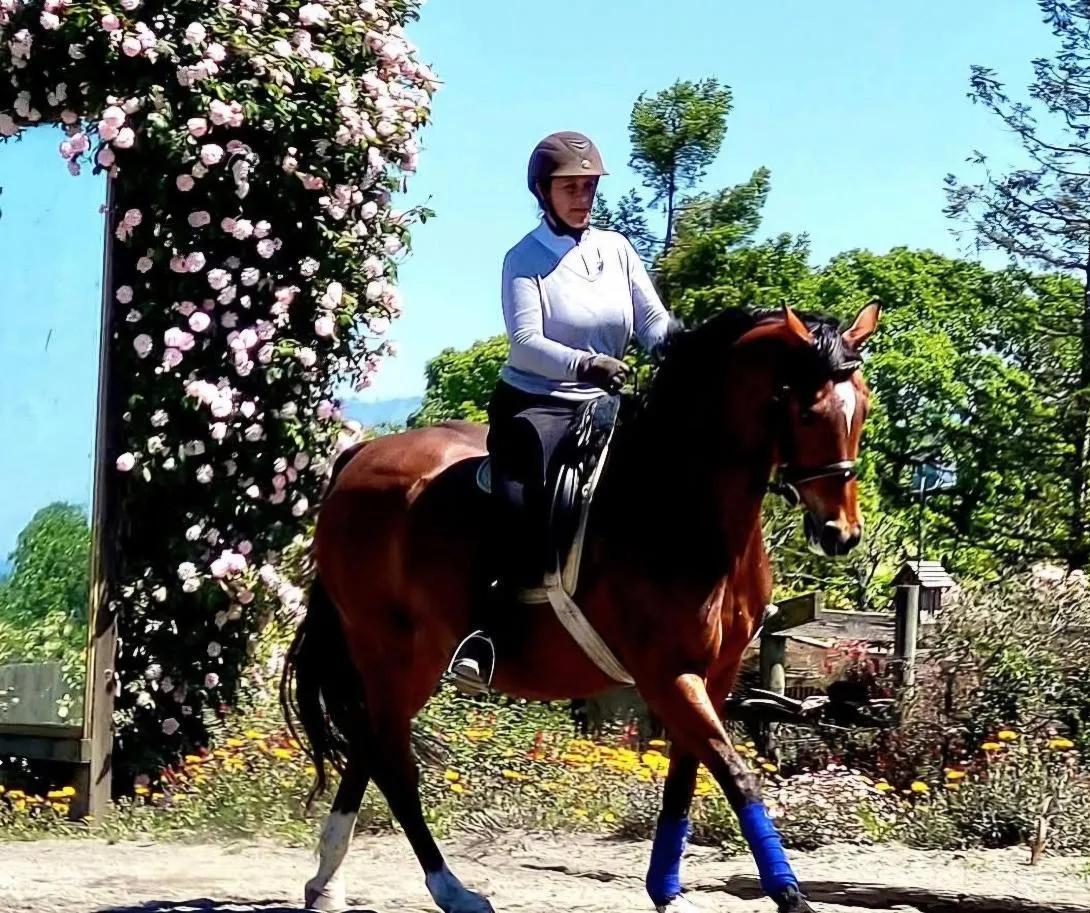
Classical dressage training
Calm. Forward. Straight. Supple.
The fundamental dressage principles of training, for both horse and rider, are of utmost importance.
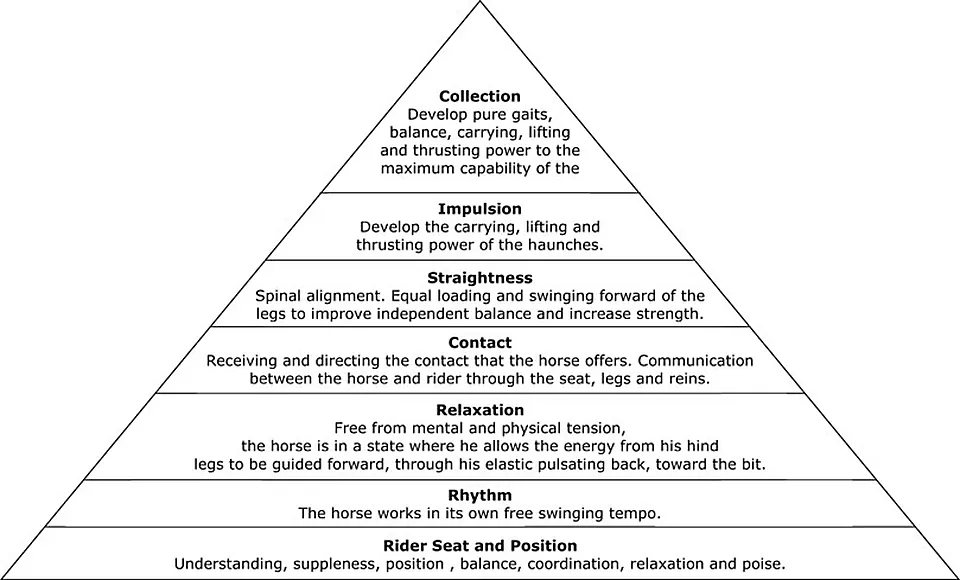
Rhythm and relaxation
The horse is developed from sound groundwork and under-saddle work that fosters rhythm and relaxation first.
Suppleness
Lateral flexibility and a swinging back, so the horse can carry its rider in a correct tempo with balance.
Connection and straightness
Acceptance of the bit and alignment on a single hoof track. The hands as a filter, not a balance mechanism.
Impulsion to collection
Impulsion from the hind leg builds strength, and eventually leads to the desirable ability of collection.
The fundamental dressage principles of training for both horse and rider are of utmost importance. I strive to guide every rider in achieving quality work in this foundation. For all riders, their equitation is the cornerstone of their ability in the saddle; without this, the best technique is impossible to acquire.
Good technical skill in the saddle can only become truly useful when done with the backing of an independent seat from hands. Then the hands can be used as they were intended: as a filter, not a balance mechanism. For the horse, this is their gateway to self-carriage in balance.
No task is too menial for the true horseman.
Horsemanship
Along with taking the time to teach training fundamentals, horsemanship is also often overlooked and should be a big part of every student's repertoire: handling and caring for our equine counterpart, including feeding, shoeing, and proper saddle and equipment fitting. The horse's wellbeing and proper handling must be addressed to create a willing partner in our riding experience.
The training pyramid
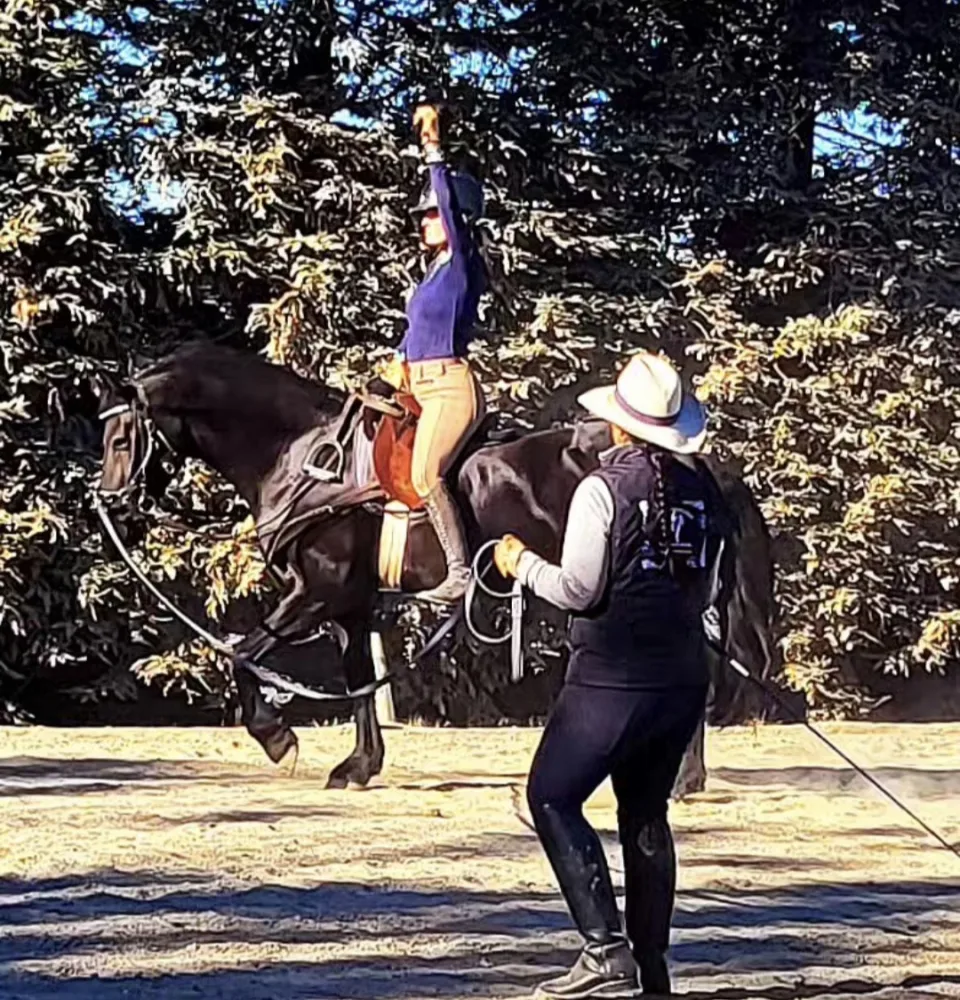
Many horses, one training scale
When a student experiences a connection with an array of horses of different breeds and backgrounds, their perspective and understanding of the training scale of correct riding develops. I have always believed that to call oneself a "trainer" you should have insight into the training of many types of horses. Through this philosophy I have developed an ability to recognize each horse's unique qualities and differences, with different temperaments and physical strengths or weaknesses, all of which need consideration.
I take the time necessary to teach my students, as well as the training of their horses. Both need consistency, which promotes confidence and calmness. When our priority is to better ourselves, we earn the pleasure of finding harmony with our horses and developing their talents as an athlete. The most important prerequisite is commitment to improving oneself for the wellbeing of the horse.
Learn this with Tressa
Virtual lessons, clinics, or lessons at the farm.
Tell Tressa about your horse and what you would like to work on.
Or email bouldendressage@gmail.com